
After 23 Years in Business, Why I'm Embracing AI Instead of Fighting It
Thirty years ago, when I started in the design field, there was no Google, no Facebook, no smartphones, and certainly no AI.
Artwork was delivered on disks. Proofs were couriered. Websites were still a novelty. If you wanted to find a business, you opened the Yellow Pages.
Back then, if someone had told me that one day a computer would be able to create artwork, write articles, build websites, answer questions, and generate videos in seconds, I would have laughed.
Yet here we are.
Over the last three decades, I've watched technology completely transform the way we work.
I saw film cameras replaced by digital.
I saw typesetting disappear.
I watched desktop publishing revolutionise the print industry.
I saw businesses reluctantly embrace websites.
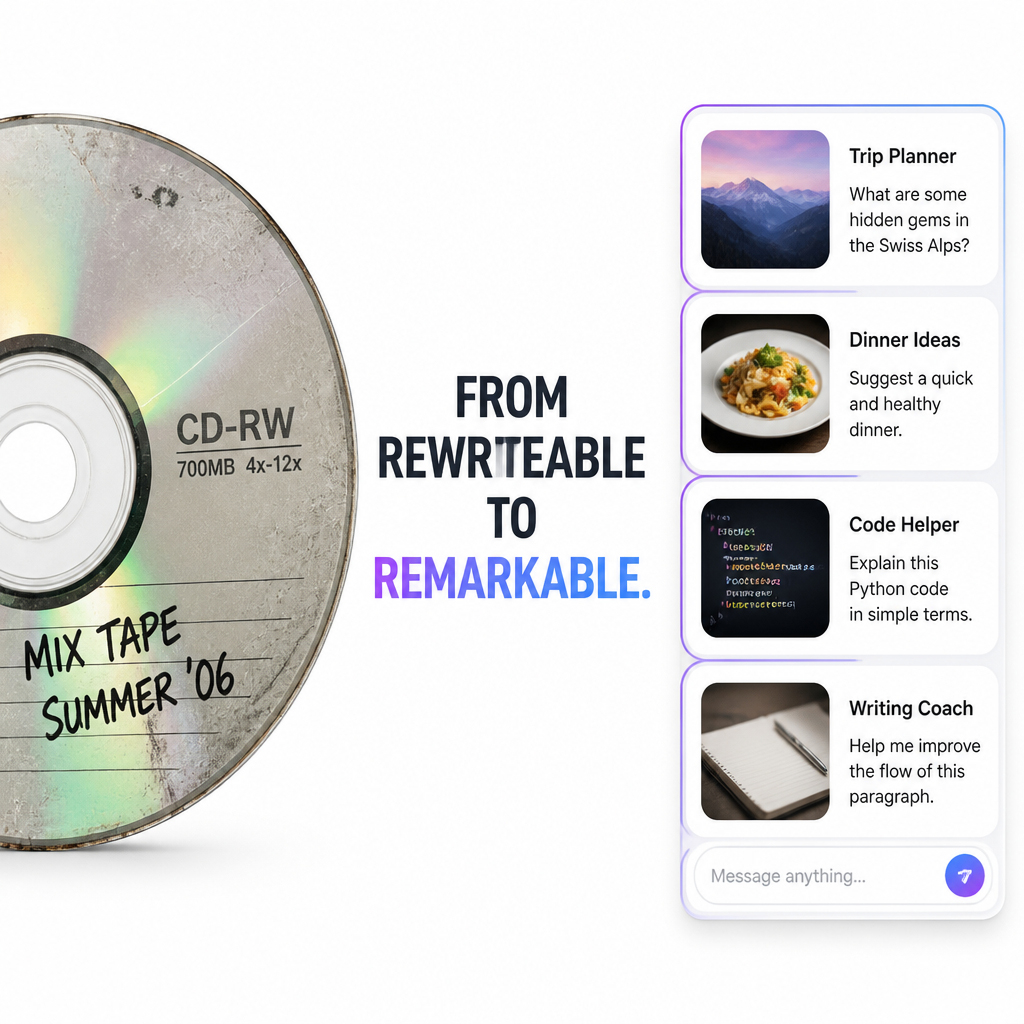
Then came social media, smartphones, online reviews, cloud computing, and countless other changes that many people initially resisted.
Every major shift followed the same pattern.
Some people complained.
Some people ignored it.
Some people insisted it would never catch on.
The people who adapted were the ones who prospered.
AI is no different.
I've noticed a lot of fear around artificial intelligence. Designers worry it will replace designers. Writers worry it will replace writers. Marketers worry it will replace marketers.
Personally, I think they're asking the wrong question.
The question isn't whether AI can produce content.
We already know it can.
The real question is whether AI can understand your business, your customers, your goals, your community, and your unique challenges.
That's where experience still matters.
Anyone can ask AI to create a logo.
Anyone can ask AI to write a blog.
Anyone can ask AI to build a website.
But knowing whether that logo is right for your brand, whether that blog will connect with your audience, or whether that website will actually generate enquiries—that still requires human experience and judgement.
In many ways, AI reminds me of the arrival of desktop publishing in the 1990s.
Suddenly everyone could design a brochure.
That didn't make everyone a designer.
It simply gave good designers better tools.
I believe AI is doing exactly the same thing today.
It's not replacing expertise.
It's amplifying it.
For my own business, AI has become an incredible assistant.
It helps me research faster.
It helps me explore ideas quicker.
It helps me analyse websites, generate content frameworks, identify opportunities, and automate repetitive tasks.
What it doesn't do is replace the years of experience I've gained helping businesses grow.
It doesn't replace strategy.
It doesn't replace relationships.
It doesn't replace understanding people.
The truth is, I'm more excited about the future of marketing and design than I have been in years.
For small businesses especially, AI is creating opportunities that simply didn't exist before.
Tasks that once took days can now take hours.
Research that once took hours can now take minutes.
Businesses can compete more effectively without needing huge budgets.
That's incredibly exciting.
After 23 years in business, I've learned one thing.
Technology always changes.
The fundamentals don't.
Businesses still need trust.
They still need relationships.
They still need good ideas.
They still need people who understand how to turn tools into results.
AI is just the latest tool.
And like every major technology shift I've seen over the past three decades, those who learn to use it well will have a significant advantage over those who ignore it.
I'm not embracing AI because it's fashionable.
I'm embracing it because I've spent 30 years watching what happens when industries evolve.
The future doesn't belong to people who fight change.
It belongs to people who learn how to make it work for them.
And for the first time in a long time, that future looks incredibly exciting.
